Documentary Review
Documentary Review: ‘The Best of the Best: Jazz from Detroit’ – A City and Its Sound, Its Legacy and Its Resistance

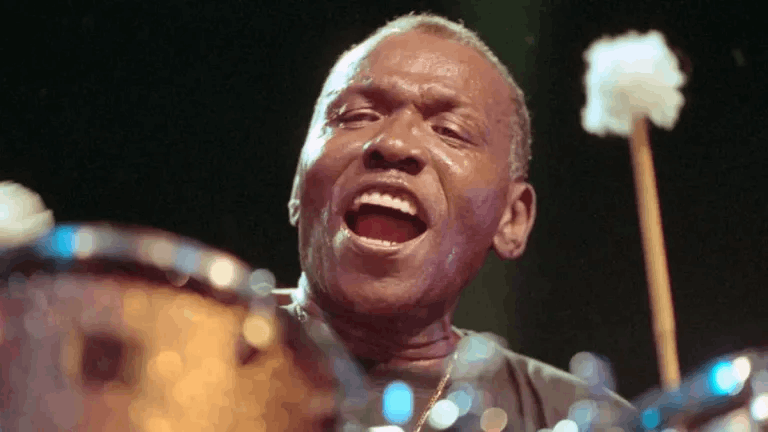
There’s a certain kind of weight a city carries when its story has been told too often in fragments. Certainly, you can say that Detroit is a place that knows this weight. ‘The Best of the Best: Jazz from Detroit‘, directed by Daniel Loewenthal, approaches that burden with patience and respect, choosing not to rush through myth or nostalgia but to sit with history as lived experience.
This is not a documentary interested in crowning a single hero or freezing jazz in amber. Instead, it treats Detroit itself as the main character. A subject deserving to be the centre of the story. What becomes clear early on is that this film understands jazz as a consequence, not an accident. Detroit’s sound did not appear in a vacuum. It grew out of labour, migration, segregation, ambition, and survival. Daniel Loewenthal traces this lineage carefully, moving through decades of social and economic shifts while keeping his focus on the people who made the music breathe. The city’s industrial rise and eventual collapse are not background details here; they are part of the rhythm. Factories, neighbourhoods, churches, schools, and clubs all play a role in shaping a culture that values discipline as much as freedom.
One of the film’s strongest instincts is its refusal to flatten jazz history into a clean timeline. Instead, it presents Detroit as a training ground where talent was tested, refined, and sometimes broken before being sent out into the world. You get the sense that to survive musically in this city, you had to arrive prepared. There is no shortcut past the elders, no way around the work. It paints the idea of Detroit as a proving ground rather than just a birthplace of Jazz. To be seen or accepted, you would have to go through Detroit.

The documentary places heavy emphasis on mentorship, and rightly so. Jazz here is passed down, not downloaded. Teachers, bandleaders, and community figures emerge as cultural anchors and people who understand that preserving the music means preserving standards. The film doesn’t romanticise this process. It shows discipline, expectation, and the quiet pressure of living up to a legacy. In doing so, it reframes greatness not as individual brilliance alone, but as something forged in relationship and responsibility. Several of these people are talking heads in this film. They share, reveal and even corroborate.
There is also an unflinching honesty in how the film deals with loss. Entire neighbourhoods that once pulsed with creativity were erased under the banner of development, and the documentary does not soften that truth. These moments land hard because they are framed not just as urban planning decisions but as cultural amputations. Yet even here, the film resists despair. What emerges instead is a deep respect for endurance is the idea that while buildings fall, knowledge and sound can still travel, adapt, survive and thrive.
Stylistically, the filmmaker keeps things grounded. The film relies on a steady interplay of archival material, contemporary interviews, and performance footage, allowing the music to speak without unnecessary embellishment. This approach gives the documentary a measured confidence. It trusts the audience to listen, to connect dots, and to feel the weight of continuity across generations. The result is a film that feels informative without being academic, emotional without becoming sentimental.
What struck me most is how the documentary balances accessibility with depth. You don’t need to arrive as a jazz scholar to understand what’s at stake here. The film explains enough to orient newcomers, but it never dilutes the complexity of the music or the politics surrounding it. Jazz is presented as demanding by nature, and Detroit is shown as a city that embraced that demand rather than shying away from it.
By the time the film reaches the present, there’s a quiet sense of defiance in the air. Jazz may no longer dominate popular culture, but in Detroit, it is treated as sacred ground. The musicians and educators carrying the torch do so with intention, fully aware of what was lost and what must still be protected. This isn’t nostalgia; it’s stewardship.
‘The Best of the Best: Jazz from Detroit’ ultimately works because it understands that jazz is not just something you hear, it’s something you inherit. It belongs to a community that shaped it under pressure and refused to let it be stripped of meaning. This documentary film stands as a reminder that Detroit’s contribution to jazz is not a footnote in American music history; it is a backbone. For anyone willing to listen closely, this documentary offers more than education it offers context, accountability, and a deep respect for a city that never gave its soul away.
I will score it 4.5 out of 5 stars.