Documentary Review
Documentary Review: SEEDS FROM KIVU – Living Between Trauma and Hope

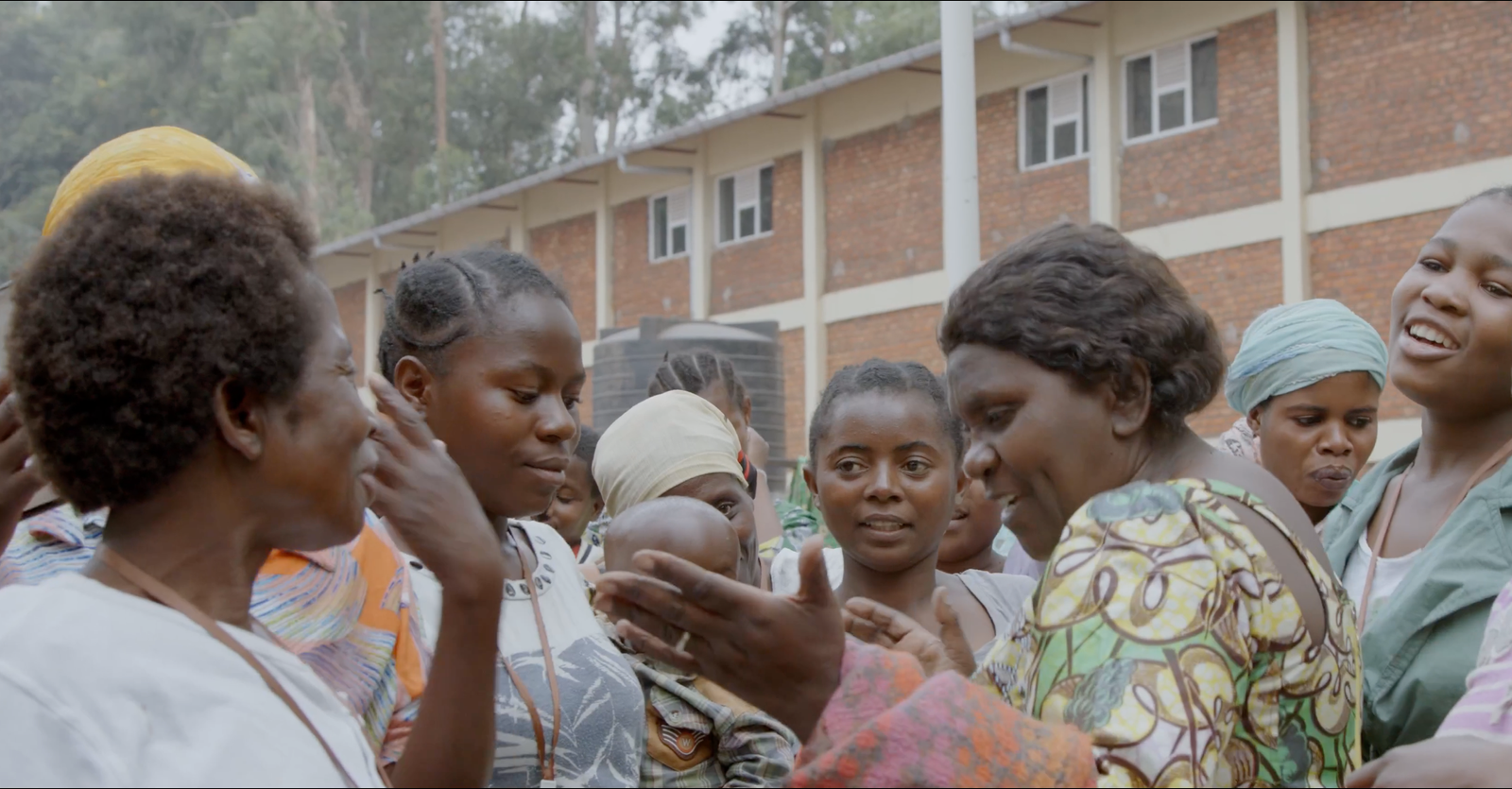
SEEDS FROM KIVU is a harrowing yet deeply intimate documentary short rooted in one of the most brutal and under-reported humanitarian crises in modern history. Set in Kivu, an area of the Democratic Republic of Congo long scarred by conflict, rape as a weapon of war, and mass displacement, the film directed by Néstor López and Carlos Valle shows the efforts of Panzi Hospital to provide hope and a sanctuary for some of the affected women. What the filmmakers deliver is not just a documentary, but a sobering reminder of the resilience that grows out of unimaginable suffering.
At the heart of the film lies a deeply emotional and ethically complex narrative: women who have survived gang rape by local militias now confronting the existence of children conceived through those assaults. The documentary frames this dilemma not sensationally, but with meditative restraint. It asks a profoundly human question: What does healing look like when the trauma has left a living reminder? In exploring this, the filmmakers guide us through psychological treatment sessions that lay bare the internal battles these women fight. The conflicts between love and rejection, guilt and survival, cultural expectations and personal truth. The film refuses to present motherhood as a simple ideal; instead, it recognises it as a contested emotional landscape shaped by pain, stigma, and courage.

“No one chooses where to be born” are the first words we hear from one of the survivors who becomes a key subject of the film. These words immediately grab your attention and make you want to lean in and listen to her story. Their stories, as they unfold, pull you into their harrowing encounters with violence, displacement, and judgment. Yet these women speak with a bravery that forces you to sit still, to absorb every word, every trembling breath, every memory they reluctantly relive for the camera.
In one particularly stirring portion of the film, a group of young girls speak about the fear that still hangs over their lives. One mentions she is always afraid it can happen to her again, her voice small but steady. Another heartbreakingly admits that her experience has made her think less of herself compared to other girls. “I hate myself,” she says, and in that moment, you immediately feel that she carries scars that go far beyond the physical. These are wounds the world rarely sees, let alone acknowledges.
Yet the film doesn’t leave us in that darkness. “Being a victim of sexual violence is not the end of the world,” another survivor says one of the film’s most inspiring voices. She shares how she picked herself up, determined to reclaim her life. With only ten dollars, she started a charcoal business that has grown into other endeavours. Now she dreams of going back to school to pursue becoming a doctor. Her story becomes a powerful counterweight to the violence, reminding us that survival is not just a possibility but a declaration.
Denis Mukwege, the Congolese gynaecologist who won the 2018 Nobel Peace Prize for his work in fighting sexual violence as a weapon of war, also appears throughout the film. We see how he treats and supports victims at the Panzi Hospital and Foundation in Bukavu. His presence grounds the film in both compassion and accountability. Mukwege’s advocacy goes beyond healing bodies, it carries a relentless push to ensure perpetrators do not escape justice.
With a runtime of just 26 minutes, the film still manages to capture the rhythms of life in Kivu. Nothing is over-glorified or sensationalised. We see the struggle, but we also witness the love and communal strength that bind the people together. The visuals are carefully crafted, enhancing the film’s emotional power without overwhelming its subjects. Every shot feels intentional, allowing the landscape and the faces to speak for themselves.
SEEDS FROM KIVU is as heartbreaking as it is hopeful. It is a mirror held up to a corner of the world too often ignored, but also a testament to the strength that grows even in the harshest soil. I score this documentary 4 out of 5 stars.