News
Ghana’s Film Development Fund Draws Near 100 Applications as Pitching Enters Final Stretch

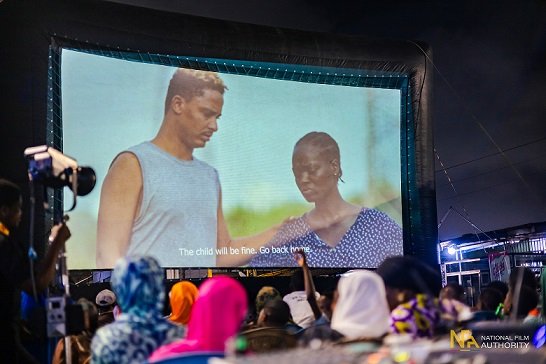
The National Film Authority’s Film Development Fund (FDF) has attracted close to 100 applications, together requesting almost GH¢100 million from a seed fund of GH¢20 million. 56 applicants are now pitching in person to a panel of evaluators, in sessions that began on 9 November and will conclude on Friday, 13 November. The panel’s goal is to settle the final list of projects that will receive funding.
The numbers tell their own story. The total budget of all submitted projects comes to almost GH¢1 billion, roughly fifty times the size of the Fund. Requests are about five times what the Fund holds. Ghana’s filmmakers, in other words, did not wait to be convinced. They arrived with projects, budgets and ambition.
From 100 applications to 56 pitches
Under the Fund’s rules, drawn from the Film Development Fund provisions of the Film Development and Classification Act, 2016 (Act 935), the Fund may back up to 60 percent of an eligible project’s budget, and applicants must raise the balance themselves. That design is deliberate. A cedi from the Fund is meant to pull in private and partner cedis, which is how a GH¢20 million fund can sit at the centre of a pipeline worth far more.
The 56 shortlisted applicants are defending their projects before the evaluators, who are scoring the quality of each pitch alongside the written application. The NFA says the focus is on projects that are bankable, deliverable and rooted in Ghanaian content.
“The response has been remarkable. Close to a hundred applications and a combined project value approaching one billion cedis tell us the industry has been waiting for this kind of structured support,” said Kafui Danku-Pitcher, Executive Secretary of the National Film Authority. “Our job now is to be rigorous and fair, and then to move quickly. Filmmakers who are selected should be on set, not waiting on paperwork.”
Mawuko Afadzinu, Chairman of the Film Development Fund Management Committee, said the committee has approached the process as stewards of a public resource. “This is not a prize draw. We are looking for projects with a credible plan, a capable team and a clear route to audiences and revenue. The strength of the pitches so far gives us confidence that the Fund will be put to work well.”

Kafui Danku-Pitcher, Executive Secretary of the National Film Authority
Ten windows, one clear pattern
More than 66 percent of the applications received are for the Production Window, which makes finished films the Fund’s most sought-after outcome by a wide margin. The Fund’s approved seed allocation is organised into ten windows in two groups, so that support can reach every part of the film value chain, not only production.
Five Core Windows carry the main investment in the industry: Production, Distribution & Marketing, Cinema Infrastructure Development, Strategic Industry Projects International Co-Production, and. Five Enabling Windows build the foundations around them: Development, Training & Capacity Building, Research & Innovation, Regional Development & Inclusion and Public Education & Behavioural Change.
The concentration in production is easy to understand. After years of limited access to finance, producers have films ready to shoot. But a healthy industry needs more than productions. It needs scripts that are developed before the cameras roll, trained crews, cinemas and distribution to carry finished films to audiences, and co-production deals that open foreign markets.
This is where the Fund’s wider design matters. The windows beyond production give the NFA room to build the whole chain, and they are also where new partners can have outsized impact. A bank may find the case for Cinema Infrastructure compelling. A telecom or consumer brand may prefer Distribution & Marketing, and a development agency may see Training & Capacity Development or Regional Development & Inclusion as the natural fit. Each window offers a different entry point for the same goal, which is a Ghanaian film industry that can sustain itself.
What happens next
Once the panel makes its final selection, the NFA is targeting disbursement from the end of November into early December, so that funded projects can begin execution before the year closes. For crews, cast and suppliers, that means work starting in the first weeks of the new production cycle, and the first visible returns on a Fund that was formally launched in May 2026.
Where Ghana stands among Africa’s film industries
To understand why the Fund matters, it helps to look at how the continent’s leading film industries have grown, and what separates the ones that scaled from the ones that stalled.
Nigeria is the clearest example of scale. Anglophone West Africa’s box office reached roughly ₦15.6 billion in 2025, according to figures released by FilmOne Entertainment, with Nollywood titles taking about 49.4 percent of revenue, narrowly ahead of Hollywood’s share. The Nigerian box office has climbed from about ₦7.4 billion in 2023 to about ₦15.6 billion in 2025, and industry projections point to ₦20 billion in 2026. Estimates put direct film employment at around a million people, and the federal government has set an ambition of a US$100 billion creative economy by 2030. Nollywood’s rise rested on volume, a deep domestic audience, and a growing multiplex network that gave local films somewhere to be seen.
South Africa shows the value of infrastructure and incentives, and also their fragility. The National Film and Video Foundation has commissioned economic impact studies for years, tracking the industry’s contribution to GDP, jobs and tax revenue. The country’s foreign production incentive, which pays 25 percent of qualifying local spend with a bonus for Black-owned service companies, drew more than R2.5 billion in foreign production investment in the period from November 2023 to June 2024. But the scheme approved no new projects in the 2024/25 and 2025/26 financial years because of a funding shortfall, at a reported cost of roughly 1,850 jobs. The lesson is that financing support only works when it is predictable.
Egypt is Africa’s oldest film industry and still one of its largest by audience. Its box office was running ahead of pre-pandemic levels in 2025, yet currency depreciation has cut the hard-currency value of that box office to roughly US$37 million, down from nearly US$60 million six years earlier. Cairo has responded with a state-backed plan to revive cinema as an economic and soft power asset. The lesson here is that a large home market must be matched by deliberate investment to keep pace.
Ghana has the stories, the talent and a global diaspora audience, but it has lacked the plumbing. Commentators in the industry have pointed to fewer than twenty functional cinema screens for a population above 33 million, compared with more than 800 in South Africa. There is also no comprehensive system tracking box office, audiences or production output, which makes it hard for investors to see the market. Ghana has tried to close the financing gap before. The 2021 Presidential Film Pitch Series drew 100 submissions and shortlisted 25, producing at least one investment deal for a documentary series. What was missing was a standing, statutory fund.
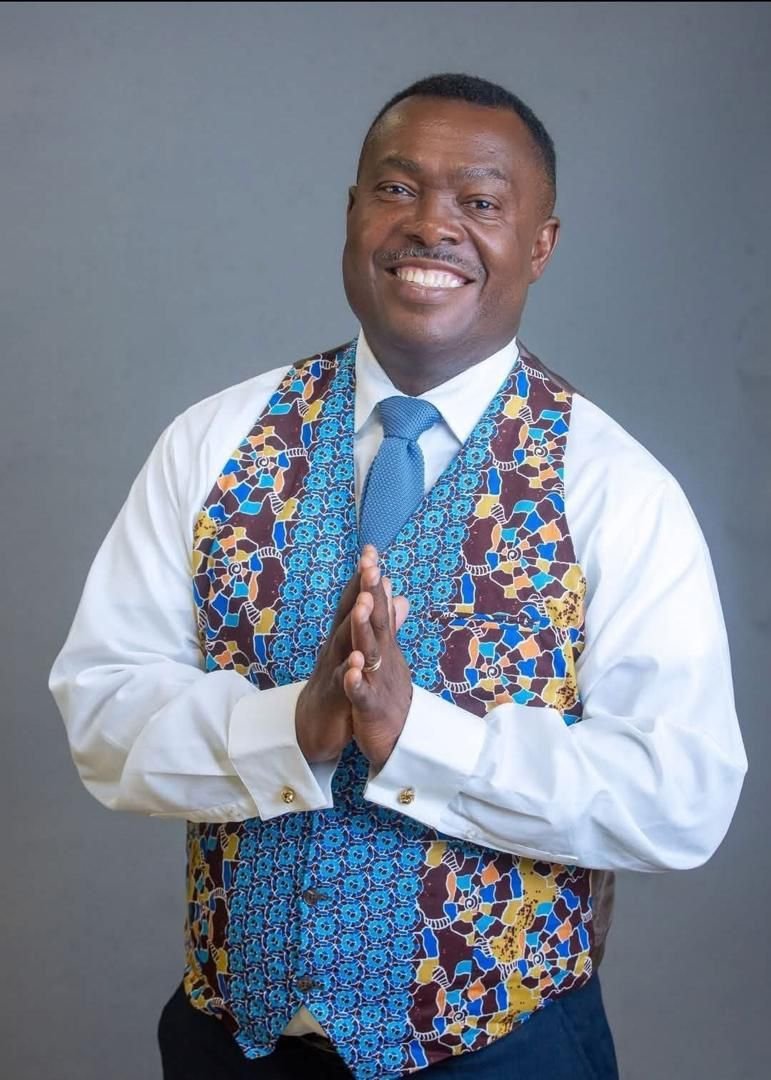
Mawuko Afadzinu, Chairman of the Film Development Fund Management Committee
How the Fund can change Ghana’s trajectory
The Film Development Fund is that missing piece. Three features give it the potential to shift Ghana’s position.
It converts ambition into financed production. Nigeria’s growth rested on a steady flow of locally financed films, and South Africa’s grew with sustained incentives. A dedicated Fund gives Ghanaian producers a reliable first source of capital.
It crowds in private money. With a cap of 60 percent on its share of any project, the Fund is designed to attract co-investors and keep producers invested in commercial success.
It builds a track record. Disbursement, delivery and repayment data will, for the first time, give banks, brands and international partners evidence about how Ghanaian film projects perform.
The Fund will not match Nollywood’s scale by itself. GH¢20 million is a seed, and the demand shown by this first round makes the case for it to grow, and for corporate and development partners to join. But it gives Ghana what South Africa’s and Nigeria’s industries each needed at an early stage: a credible, rules-based source of finance that producers can plan around.
Cinema Train: giving funded films somewhere to go
Financing production is only half of the equation. Films need audiences, and audiences need places to watch. That is where the NFA’s newly launched Cinema Train Initiative comes in.
Launched on 31 October 2026 at Silverbird Cinemas in Accra, the Cinema Train aims to widen access to cinema, improve exhibition and create sustainable revenue for Ghanaian filmmakers. It links filmmakers, distributors, cinema operators and communities, and plans to extend screening venues through partnerships, including with the National Commission on Culture and its centres across the country. The NFA’s Board has set a target of getting at least one percent of Ghana’s population to watch locally produced films.
The two initiatives are built to reinforce each other. The Fund supplies new, premiere-ready Ghanaian content, and the Cinema Train provides a route to market, so that funded films reach paying audiences and generate the revenue needed to repay and recycle capital.
“The Fund and the Cinema Train are two halves of one strategy,” said Ms Danku-Pitcher. “We are financing the stories and building the screens and the audiences to receive them. When both work, filmmakers earn, investors see returns, and the industry grows.”
Mr Afadzinu added: “Every project we back is a bet on an audience. The Cinema Train strengthens those bets, because a film that can reach viewers in communities across the country is a safer investment for everyone involved.”
Growing the Fund: an open invitation to partners
The first round has proved the demand. The next step is to build a Fund big enough to meet it. The NFA is now seeking to grow the Film Development Fund through partnerships with corporate Ghana, financial institutions, development partners, international film funds, exhibitors and platforms, and it is inviting them to come in early.
The case is simple. Almost 100 applications worth nearly GH¢1 billion have landed on a Fund of GH¢20 million. Every viable project that cannot be financed is a set of jobs, a story and a revenue stream that Ghana does not get. Partners who join now help close that gap, and they do so while the industry’s rules, pipeline and track record are being set.
“The Fund has shown that Ghanaian filmmakers are ready to build. What they need is more capital standing beside them,” said Kafui Danku-Pitcher. “We are opening the door to banks, brands, development partners and fellow film bodies who want to back an industry on the rise, and we want them in the room while the opportunity is still being shaped.”
What partners gain
- Early access to a vetted pipeline. Projects reach partners after a structured review, a pitch to evaluators and a published set of criteria, which gives co-investors a clearer view of what they are backing.
- Leverage on every cedi. Because the Fund backs up to 60 percent of a project’s budget, a partner’s contribution stands next to public capital and the producer’s own stake.
- A route to audiences. Through the Cinema Train, partner-backed films and brands can reach cinema-goers in Accra and, as the network grows, in communities across the country.
- Brand and reputational value. Partners are associated with the revival of an industry that employs young people, preserves culture and carries Ghana’s image abroad.
- Evidence and data. As funded projects deliver and repay, the Fund will build the track record on performance that Ghana’s film sector has lacked, which helps every later investor.
- A seat in shaping the sector. Early partners can help set priorities for how the Fund grows, from production to training to cinema infrastructure.
How to engage
Partners can contribute capital to the Fund, co-finance individual projects, sponsor specific windows or events, or support the Cinema Train and training programmes. Organisations interested in partnering with the Fund should contact the National Film Authority.
The filmmakers who pitched this week showed what Ghana can produce when given a chance. The invitation now goes to everyone else with a stake in the country’s creative future: come and invest in the next chapter of Ghanaian film.
The road ahead
The next few weeks will show whether Ghana can turn this moment into momentum. The panel will finalise its selections after the pitching sessions close, and disbursement is expected from late November. Beyond this first round, the NFA says it will continue to work with government, corporate Ghana and development partners to deepen the Fund and keep it running on predictable terms.
For an industry that has long asked for access to finance, the message from the first round is encouraging. The demand is there, the projects are there, and the machinery to back them is now at work.