I’ve spent some good years working around Ghana’s film ecosystem. As Director of the Black Star International Film Festival for five years, I had the rare opportunity to watch countless films pass through the festival; and to support the development of many young filmmakers through carefully curated masterclasses and workshops.
I was always excited when Ghanaian films came in. Always curious about the new filmmaker: who they were, what they were trying to say, and how the festival could support them, even if it was simply by giving their work a screen.
Over time, I’ve seen it all: talented filmmakers struggling to find their footing, others succeeding quietly (sometimes briefly), and many repeating the same mistakes—just with new titles and fresh vim.
As the year winds down and the festive season invites rest, reflection, and gratitude, I’ve found myself thinking deeply about the Ghanaian film industry; not from a place of complaint, but from care.
These days, I’m less interested in clout-chasing optimism and the endless ‘opportunities’ that seem to plague this industry. I question myself:
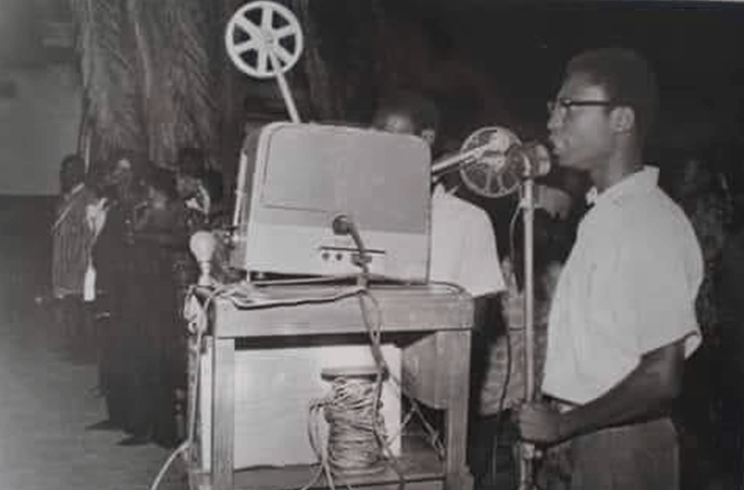
How is it that a country that was among the first in Sub-Saharan West Africa to establish a formal film institution through the Ghana Film Industry Corporation fell so far behind?
How do we actually make this industry better?
And by better, I don’t mean throwing low-impact film events and masking them as growth or progress. I’m far more interested in strategic clarity.
So this article isn’t a complaint. It’s simply a reflection of where we are… and where we could be, if we chose and demanded differently.
Let’s dive in.
Wish #1: Skill Development That Prioritizes Impact Over Clout
Industries don’t collapse because of a lack of talent.
They collapse because of weak systems and poorly trained people.
From my observation, we are far more interested in red carpets, motivational panels with no real outcomes, and the aesthetics of pitching than in actual development. Real development isn’t flashy.
We need more producers who understand budgeting, international sales, long-term IP value, and rights management.
We need consistent, focused capacity-building programmes in script development, cinematography, directing, acting, post-production, VFX, SFX, line producing, and production management.
How is it that the National Film and Television Institute (NAFTI)—the only film institution that has produced some of the finest filmmakers in this country still struggles with logistics and access to adequately resourced, highly qualified tutors?
The industry is too focused on clout and not enough on impact. My wish is that government, foreign institutions, NGOs, private and corporate bodies invest more in long-term skills development than in concerts and festivals recycled with the same faces year after year.
This is a crisis. And great films will continue to fail if both talent and leadership remain under-trained.
Wish #2: A Functional, Non-Political Tax Rebate System
My wish is simple: a clear, predictable, non-political tax rebate system that is accessible to local producers as much as it is to foreign productions.
Across Africa, countries like South Africa, Morocco, Mauritius, Kenya, Namibia, Rwanda, and Tunisia operate structured, predictable film incentive systems. Big-budget productions such as Mad Max: Fury Road, Avengers: Age of Ultron, Blood Diamond, Gladiator, Mission: Impossible, Game of Thrones, Queen of Katwe, Sense8, and The Mummy didn’t choose these locations only for their beauty.
They went where the numbers made sense and where policy certainty reduced risk.
It’s hard not to wonder why West Africa still struggles with this concept. Ghana and Nigeria argue endlessly about jollof and who does Detty December better, yet the systems needed to turn these cultural moments into sustainable industry growth are missing.
Year of Return, Detty December, Black Star Experience—or whatever we choose to call them in the next political cycle—present an opportunity to anchor a structured incentive framework. But that conversation is barely happening.
In Nigeria, incentives exist, but they are largely ad-hoc. In Ghana, there is nothing at all. What we compete on is potential and unfortunately, potential doesn’t close deals.
Policy does.
Without tax incentives, Ghana will continue to lose productions to countries that treat film as an economic engine, not a favour.
Wish #3: Research, Data, and Transparency
At Ghana’s National Film Authority’s 2025 industry stakeholders’ meeting, a “1% agenda” was announced; aiming for at least one percent of Ghanaians to regularly watch Ghanaian films.
My first question was: why 1%? Then it spiralled:
What is the current percentage?
Where are Ghanaians watching films — cinemas, television, streaming, mobile?
Is the problem access, perception of quality, pricing, or distribution?
Data.
Without credible data on box office performance, audience behaviour, and genre trends, decisions will continue to be made on vibes and anecdotes.
If the goal is to grow a sustainable and globally competitive industry, data cannot be optional.
My wish is for the National Film Authority to collaborate with research institutions, universities, and firms like PwC Ghana to produce consistent industry insights.
Wish #4: A Culture of Intelligent Critique
Film criticism is not negativity. It is an essential discipline.
Industries grow when feedback is intelligent, honest, and respectful. I follow many international film critics who provide in-depth, thoughtful critique that challenges filmmakers while educating audiences.
Unfortunately, in Ghana, we tend to sit at two extremes: either overly polite or outright insulting.
Neither helps the industry grow.
We need intelligent criticism that raises standards. If a film isn’t good, let’s discuss why and how it can improve. If it was good, let’s explain why so others can learn.
Kudos to GHMovieFreak for consistently holding the line on thoughtful film criticism. We need more knowledgeable voices like that.
This is a gap I genuinely hope 2026 begins to fill.
Wish #5: A Non-Political Film Authority that Actually Gets Things Done
Ghana is fortunate to have a film authority governed by the Development and Classification of Film Act, 2016 (Act 935). On paper, this law recognises film as serious business not just entertainment.
But the big question remains: Does the NFA currently merely exist in name, or is it actively executing its mandate?
Many industry players don’t even know what the NFA is legally empowered to do. According to Act 935, the NFA is mandated to:
- Regulate film production, distribution, exhibition, marketing, and promotion
- Set standards and enforce compliance
- Promote industry development beyond one-off festivals and seminars
- Facilitate training and capacity building
- Classify and control what is publicly screened across cinemas, TV, streaming, and public venues
- Advise government on film policy and investment incentives
- Market Ghana as a film production destination
- Enforce sanctions and maintain industry order
An industry without enforcement quickly becomes informal, inconsistent, and unfair.
The NFA, unfortunately subjected to politics, has enormous power within these mandates. My wish is simple: less talk, more action.
If each year the NFA focused deeply on just one mandate and rotated annually, this industry would look entirely different within a few years.
Wish #6: Better Cinema Experiences for the Prices We Pay
This one is almost selfish but necessary.
I love watching films in the cinema. But cinema experiences in Ghana cannot be compared to those outside the country yet, tell me why ticket prices are often similar in cedi equivalents.
Broken seats, wobbly handles, poor sound, tired projector screens do not justify premium pricing.
If you are an exhibitor in Ghana, the industry deserves better.
You cannot demand high prices for sloppy experiences. We deserve comfort, consistent sound and visual quality.
Ghana’s film industry has talent, stories, and relevance. What it lacks is structure, policy seriousness, and the discipline to execute what we talk/complain about.
2026 can be different if we, together, choose to intentionally build systems and not one-time moments while keeping one another accountable.
Wishing you a reflective and restful holiday season.
Happy Holidays!
Philippa Bentuma Arthur – Managing Director, Premier 369 | Communications Strategist | Cultural Strategy
Philippa Bentuma Arthur is a communications strategist and cultural leader. She is the Managing Director of Premier 369 Ltd., where she leads strategic communications and cultural initiatives across corporate, creative, and public platforms in Ghana and beyond.